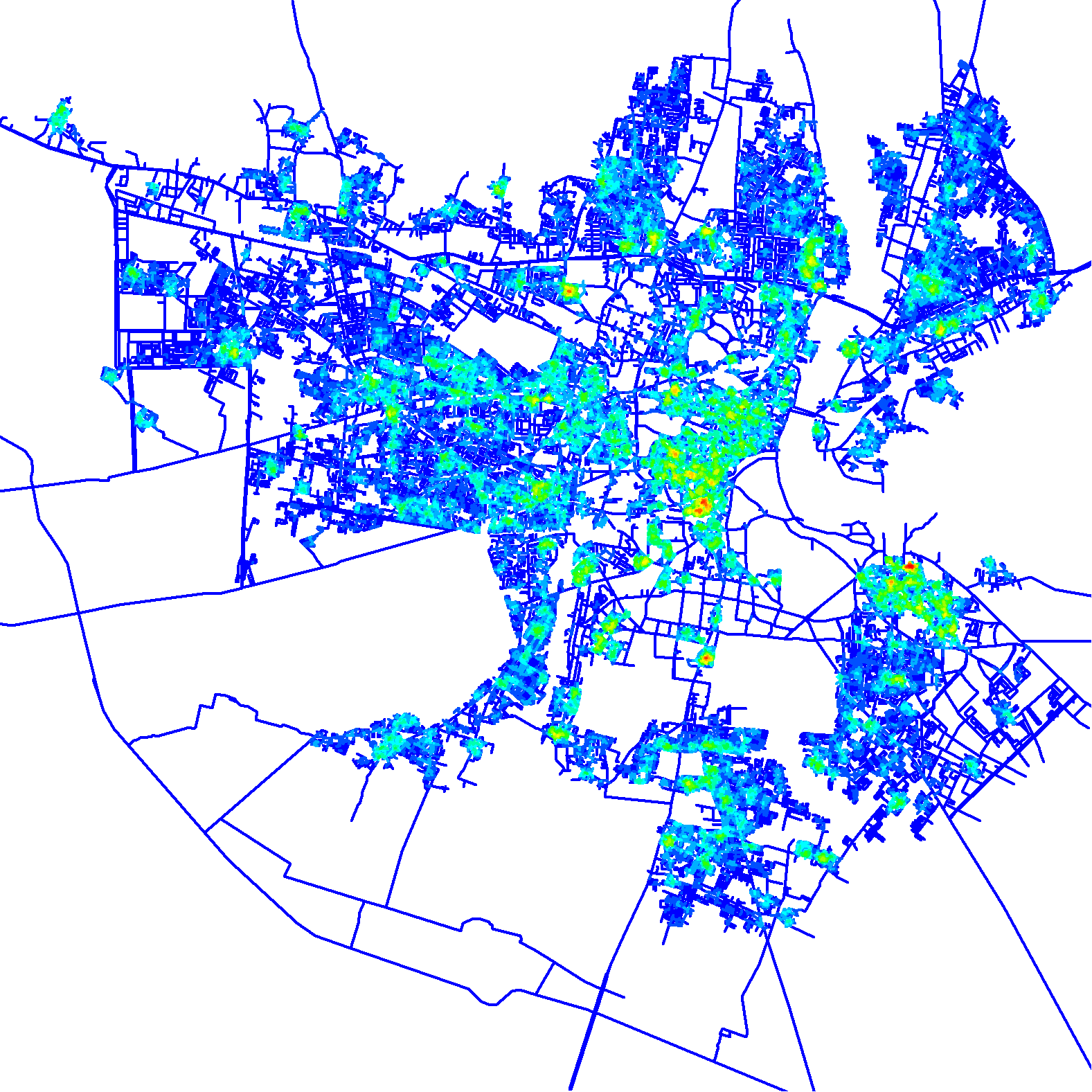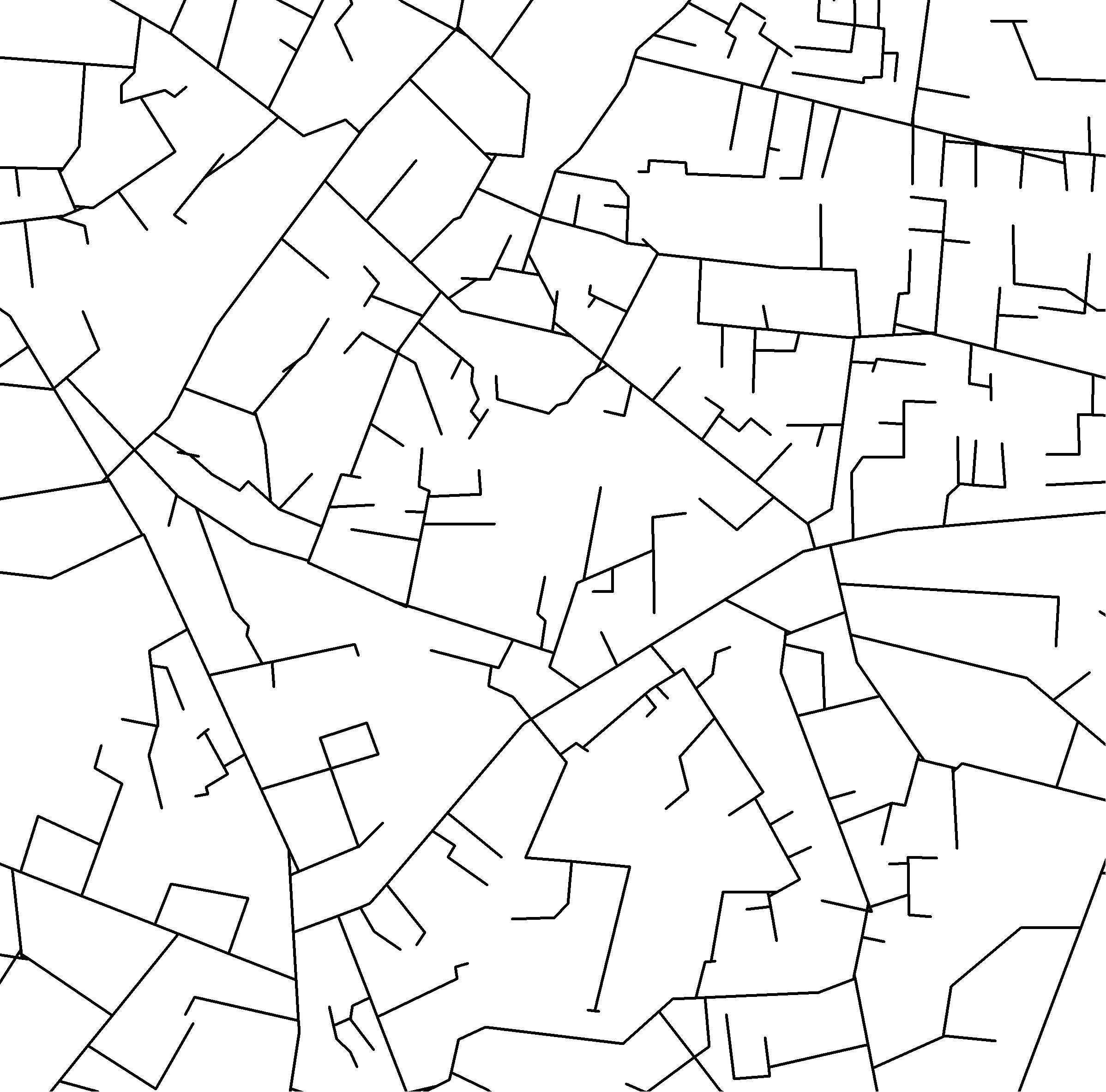
This study uses the findings from the field work of London Metropolitan University student’s to ask whether the socio-economic segregation which has been observed at the wider scale in other Indian cities is also reflected in Agra’s slums. Linking these findings with spatial analysis shows that micro-scale patterns of activity and occupation within slums are closely related to local spatial structures. The paper discusses whether the spatial mechanisms which allow a highly segregated society to live within close physical proximity to each other – and which brings economic and environmental benefits in these circumstances – can off set the longer-term impact of social segregation.

This text has been extracted from a longer paper published as part of the 8th Space Syntax Symposium that took place in Chile in January 2012 (www.sss8.cl).

1.0 Introduction

This paper aims to link three areas of study which have been carried out separately over the last five years, to help further develop the spatial understanding of slums and informal settlements.

In late 2010, an opportunity arose to study Agra, and some of its 350+ slums. This study was carried out remotely to contribute to the work of students in the Architecture of Rapid Growth and Scarce Resource (ARGSR) studio at the London Metropolitan University (LMU), who were based in Agra for a period of time. Through a process of literature review, the study was developed further to test whether the relationships identified between the socio-economic segregation of inhabitants by Caste at the scale of the city (Vithayathil, Singh, 2011), and in Delhi, at the scale of the ward (Dupont, 2002), are also present in Agra. It also provided the chance to understand whether there are any further relationships to the local scale spatial structure of slum areas.

The final part uses the findings of a literature review (where relationships between Caste and slum occupant are identified at the scale of the city and the ward), and the results of spatial analysis, to compare them with qualitative, observational, socio-economic surveys carried out by ARGSR students from a set of six case study areas. 
Read More


Introduction

The work of Bill Hillier has shown that patterns of urban form and movement are intrinsically linked. These patterns also influence the distribution of land uses, land values and density across cities: the structure of spatial networks encourage movement to and through some areas (these tend to develop as places of trade or exchange), and discourage movement from other areas (these tend to be more private residential areas). Because the spatial structure influences so many characteristics of a city, the right structure can make it easier to ensure the social, economic and environmental sustainability of a city.

As urban function has such strong requirements for movement, the ability to simulate movement and use this to generate urban form could be very useful, especially in rapidly growing cities where layouts can be generated quickly and land uses/densities distributed where they will not need major change at a later point in time.

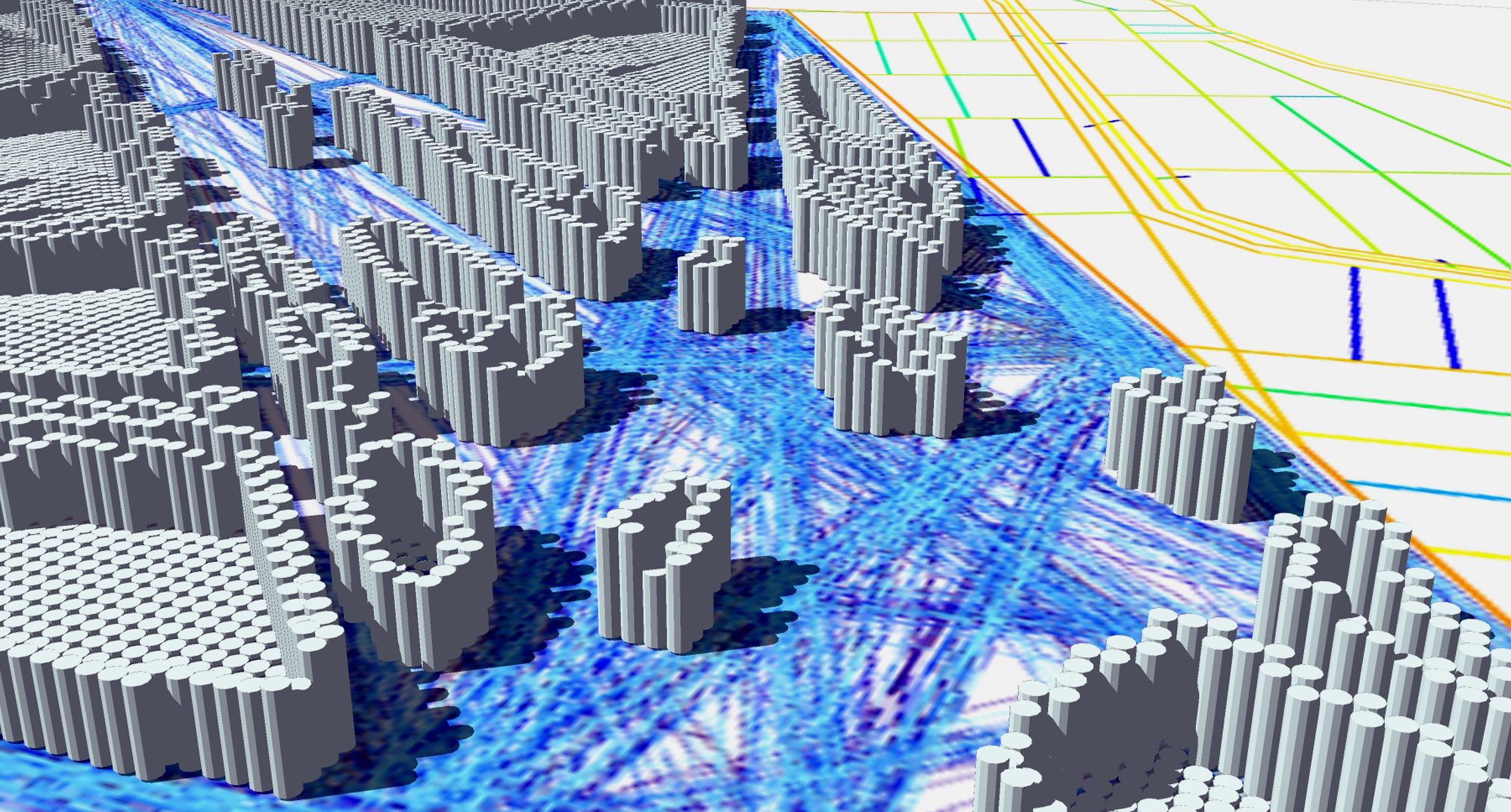
This piece shows the results of an experiment to test the outcome of a generative design approach that uses simulated movement from a wider urban context to generate an urban form.

Read More

This study has been extracted from a longer paper submitted for the 8th Space Syntax Symposium that took place in Chile during January 2012 (www.sss8.cl). It uses Space Syntax analysis to study a range of issues concerning slums, using examples in the Indian city of Agra and the Saudi Arabian city of Jeddah. 

1.0 Introduction

This paper aims to help further develop the spatial understanding of slums and informal settlements. The foundations of this paper lie in the unplanned settlements ofJeddah,Saudi Arabia, where the development of strategies to improve more than 50 unplanned settlements has formed a major component of Space Syntax Limited’s work of the past five years. In late 2010, an opportunity arose to studyAgra, and some of its 350+ slums. This study was carried out remotely to contribute to the work of students in the Architecture of Rapid Growth and Scarce Resource (ARGSR) studio at the London Metropolitan University (LMU), who were based inAgrafor a period of time. This enabled work to be carried out initially to test whether there are consistencies in the spatial properties of each city’s slums.

Read More