
01100100 01100001 01110100 01100001 00100000 01110100 01101111 01110111 01101110

future of the city/city of the future

This is an extract from a positioning paper I recently co-authored for Space Syntax around the future of the city. This post is an extract of the longer-term risks and opportunities.
The paper set out short- and long-term issues facing society, and suggested opportunities for technology to help address them.
Existing and emerging technologies provide potential solutions, but these need to be developed carefully to deliver a vision that everyone supports. Without going through this process and agreeing a social contract to operate them within, the risks have been widely publicised: a surveillance state, loss of privacy, loss of control and lives being ruled by multi-national tech giants.
This post sketches out a positive future supported by technology, where, in an older, post-work society, the city as an organisation plays a different role. In this future, tech provides a platform to stimulate local economic activity, provide access to services, develop new models of housing, protect privacy, and by integrating all of these, to attempt to address inequality.
1nf1n1ty aga1n

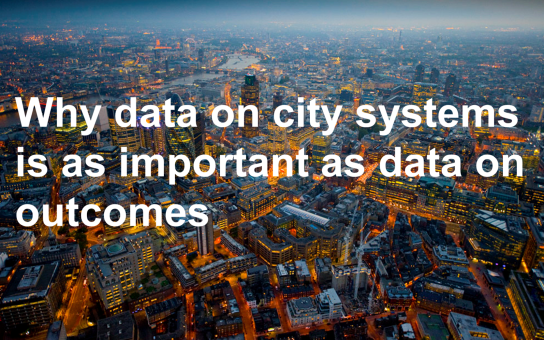
Why data on city systems is as important as data on outcomes
There are lots of interesting things going on using data in cities at the moment. Many articles and blog posts talk about how data, and open data in particular, has the potential to deliver public services better, start to address long-term outcomes (such as health problems), and create a basis for decision-making. In times when public sector funding is under pressure delivering these outcomes is even more important than normal.
Collecting data in cities is helpful as it provides something to measure progress against. It means measuring specific outcomes, which also means being very precise about what outcomes are important.
It can also be a link between deciding a wider objective (improve air quality) and a specific implementable actions (make public transport free). However, to do this requires both domain and data expertise:
- to understand the difference between data on the outcomes of a system, and the variables in that system
- to measure and analyse the urban systems that form the variables
- to know how data is recorded on urban systems and what it actually represents Read More
The potential of new mobility services to overcome poor planning in a socially responsible way
1 Comment

This is the summary of a talk I gave recently at a Mob Ox event in Oxford. It picks up some of the ideas in this post about Uber, and is especially relevant in relation to Waymo’s recent announcement.
It focusses on some work we’ve been doing to understand how infrastructure and land use interact in cities, and uses this to frame the conversation around these mobility services
How London can benefit from Uber
As Uber has lost its license to operate in London, here are some points about the potential it offers and how it could be improved further:
1. Provide mobility in places traditional public transport can’t work
2. Apply dynamic pricing in a progressive way
3. Provide driver facilities
These are described in a little more detail below – this is all written from an urban perspective, and excludes everything around business ethics, personal safety, insurance etc which has had a lot of coverage in the mainstream media.
Slum, Unplanned Settlement or Organic Growth?
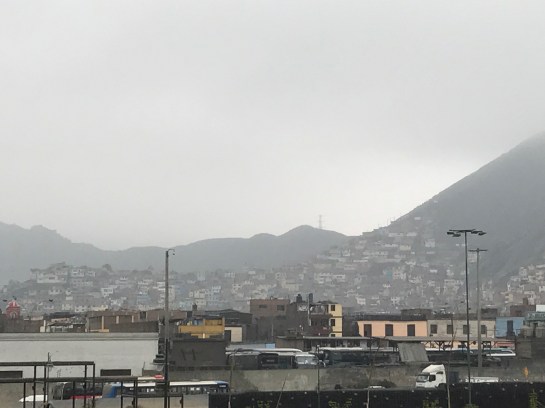 These are some observations from a trip to Lima in August, around the way that cities grow. These are only based on personal experience of the city, conversations with the Lima-nites I was with at the time and stories from the main stream media.
How should the cities of the future be designed?
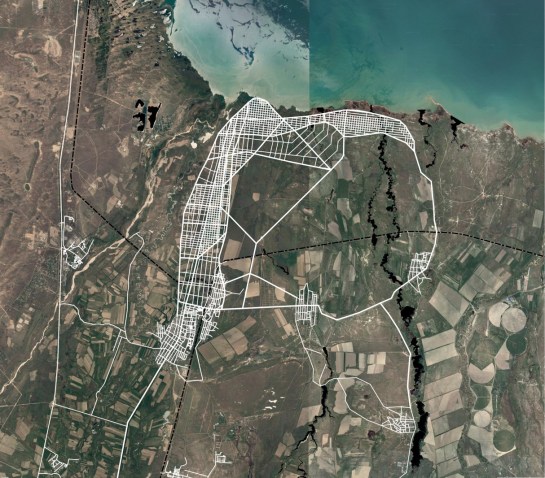
These are some notes from a talk I gave at Space Syntax’s last Urban Imperative: Improve, Extend, Create series of events in July. It looks at how to think about designing a city from scratch. The focus of this post is to look at exactly which components of a masterplan to design and why.
This shows some work that is slightly experimental. At the moment it’s about testing ideas through a process, and at the moment it’s only a process. It started as a real project to look at ideas about how to develop a city from scratch but then some further research work was done.
National scale modelling to test UK population growth and infrastructure scenarios
This is a research paper I recently presented at the 11th Space Syntax Symposium in Lisbon, co-authored with Stephen Law and Laurens Versluis.
The paper has been reformatted for re-production here and the original published version can be found here .
Abstract
This paper describes an exploratory methodology used to study the national scale issues of population growth and infrastructure implementation across the UK. The project was carried out for the Government Office for Science in 2015, focussing on two key questions: how could a “spatially driven” scenario provoke new thinking on accommodating forecast growth, and; what would be the impact of transport infrastructure investments within this context.
Addressing these questions required the construction of a national scale spatial model that also needed to integrate datasets on population and employment. Models were analysed and profiled initially to identify existing relationships between the distribution of population and employment against the spatial network. Based on these profiles, an experimental methodology was used to firstly identify cities with the potential to accommodate growth, then secondly to allocate additional population proportionally. This raises important questions for discussion around which cities provide the benchmark for growth and why, as well as what the optimal spatial conditions for population growth may be, and how this growth should be accommodated locally.
Later the model was used to study the impact of High Speed Rail. As these proposed infrastructure changes improve service (capacity, frequency, journey time), rather than creating new topological connections, the model was adapted to be able to produce time based catchments as an output. These catchments could then be expressed in terms of the workforce population within an hour of every city (a potential travel to work area), as well as the number of employment opportunities within an hour of every household.
 Urban D.A.S.