Archive

Tag Archives: urban design

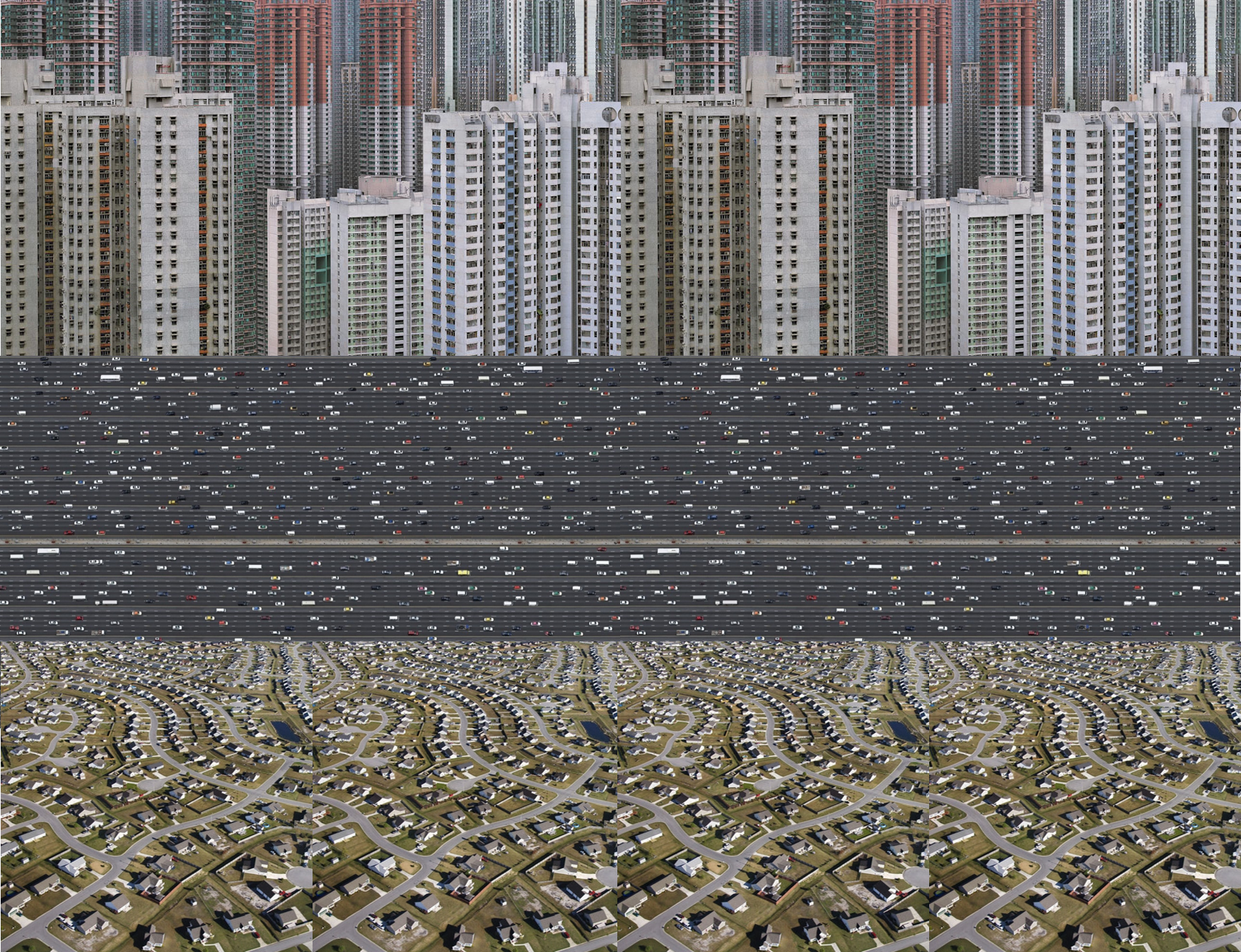
Image: Ed Parham 2023

Often conversations about the future of cities include the impact of new technology, and assume that the cities of tomorrow will be completely different. However looking back through a history of future cities we can see this is misleading.

Technology provides an interesting starting point though, it helps identify trends and it means we have to keep asking questions about cities; why society needs them, what they do, how they work, and also whether x new technology works with or against these.

In the last decade or so there have been a number of new, often tech enabled, businesses deployed in cities. Companies such as Uber, Deliveroo, Amazon, etc are built on the application of digital tech to support new business models. This success has encouraged development of, and speculation around, further waves of innovation which go beyond digitally enabled business models to include physical technologies such as self driving cars and delivery drones.  

These innovations may be very clever in themselves, but because they are to be deployed in cities, which are complex environments, filled with people, they can have unintended consequences.

Read More
Data

There are lots of interesting things going on using data in cities at the moment. Many articles and blog posts talk about how data, and open data in particular, has the potential to deliver public services better, start to address long-term outcomes (such as health problems), and create a basis for decision-making. In times when public sector funding is under pressure delivering these outcomes is even more important than normal.

Collecting data in cities is helpful as it provides something to measure progress against. It means measuring specific outcomes, which also means being very precise about what outcomes are important.

It can also be a link between deciding a wider objective (improve air quality) and a specific implementable actions (make public transport free). However, to do this requires both domain and data expertise:

  • to understand the difference between data on the outcomes of a system, and the variables in that system
  • to measure and analyse the urban systems that form the variables
  • to know how data is recorded on urban systems and what it actually represents Read More

Centrelines

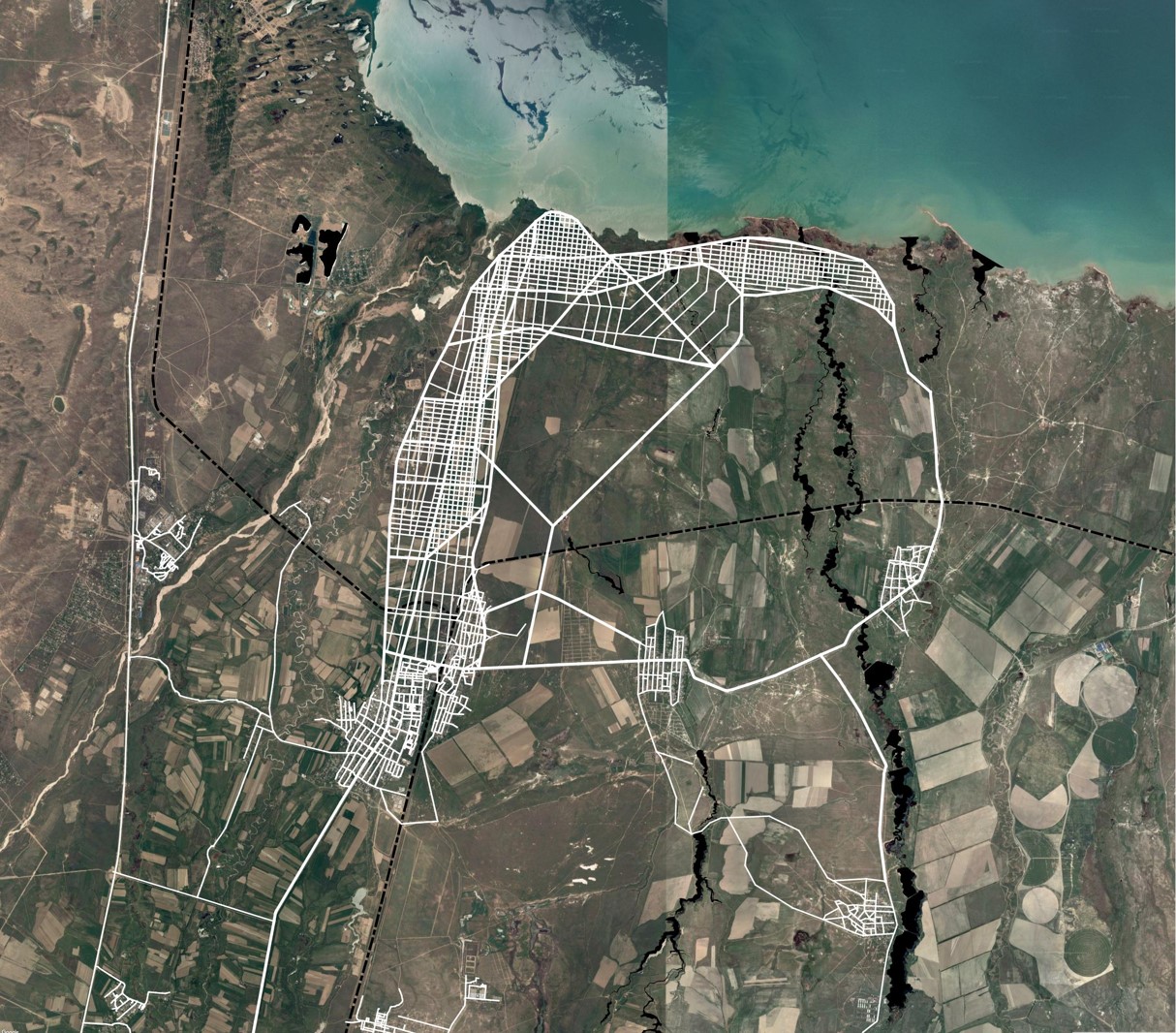
These are some notes from a talk I gave at Space Syntax’s last Urban Imperative: Improve, Extend, Create series of events in July. It looks at how to think about designing a city from scratch. The focus of this post is to look at exactly which components of a masterplan to design and why.

This shows some work that is slightly experimental. At the moment it’s about testing ideas through a process, and at the moment it’s only a process. It started as a real project to look at ideas about how to develop a city from scratch but then some further research work was done.

Read More

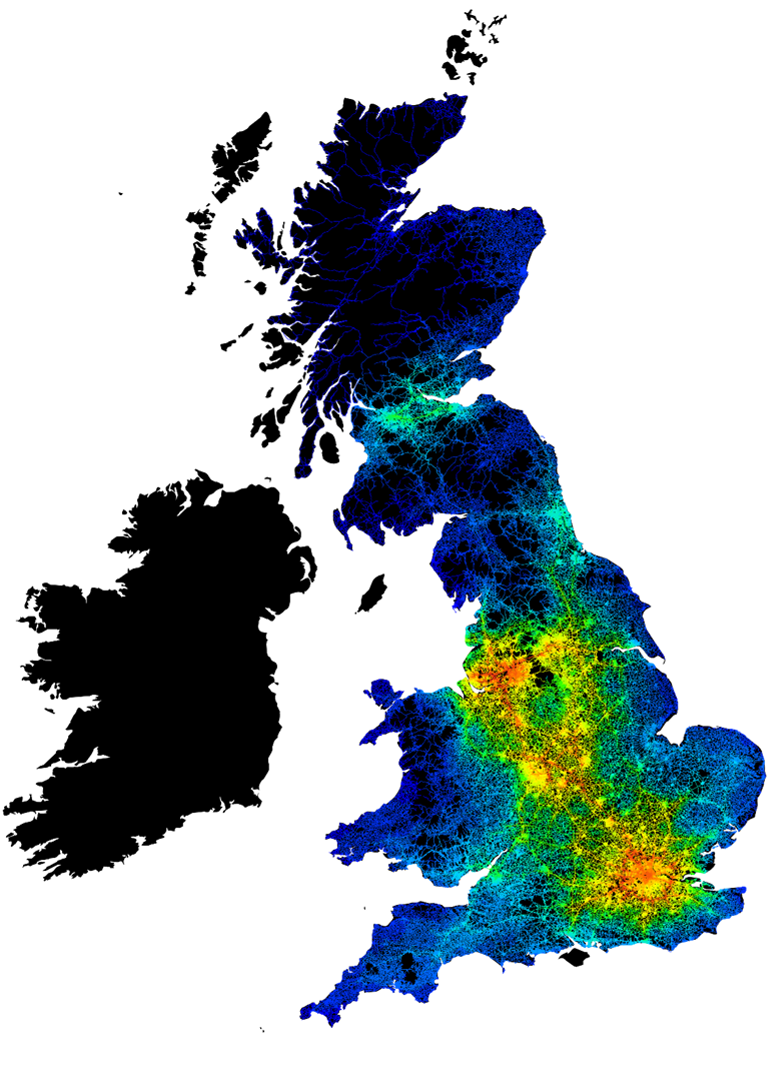
uk_model.png

This is the combination of a couple of talks I’ve given in the last few months to the ULI Urban Tech Committee and the Academy of Urbanism Digital Urbanism groups.

Urban Tech is something that has developed a lot in the last 10 years and which now seems to have a lot of interest and attention. There are a lot of terms – Future Cities, Smart Cities, Prop Tech, Urban Tech, etc – which are all slightly related but not quite connected in the way they could be.

One way of trying to understand how they fit together is by tracing what has changed in this time and what this means for the way we interact with cities.

While its interesting to see how things have changed, what is possibly more important, as professionals who work with, and in the context of cities, is to ask the more difficult “so what” questions of why things should change?

Here’s an outline of the reasons Why that will be explained in more detail below:

  • Better outcomes for cities and people
  • Creating benefits between public and private sectors in the short and long terms
  • More transparent and inclusive decision-making
  • Crossing siloes between planning and service delivery for more effective and efficient spending

Read More

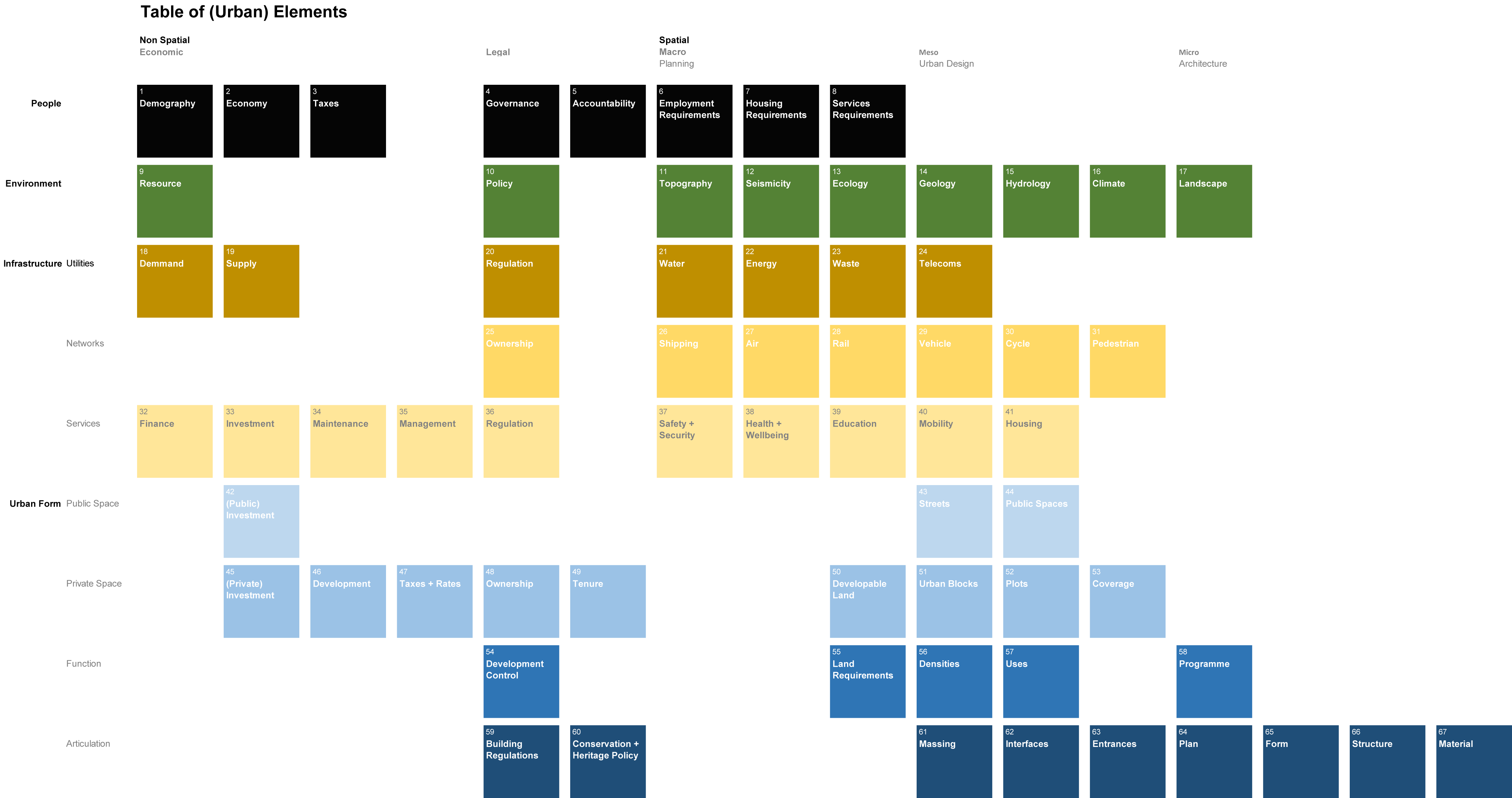
Earlier posts looked at why (master) planning hasn’t worked as intended, reaching one conclusion that the design outcomes weren’t flexible enough. The response was to aim to design the fewest fixed components and allow the city to grow more organically on a plot by plot basis within this framework. Changes in the economic or social context would be reflected by variations in density, land use, massing and speed of growth.

An early outline of fixed components includes solids (blocks, plots) and voids (street, infrastructure, and utility networks). Of course there are a secondary set of requirements that must be provided, but which there is some flexibility in terms of location or exact configuration – these include social infrastructure etc.

This post starts to set out how to develop this spatial framework. Building on Bill Hillier’s idea of the Movement Economy (1) – the configuration of space affects the distribution of people who affects the distributions of land uses and values – the starting point is the spatial network. Space is very difficult to change, with far-reaching impacts, while buildings can be replaced, and land can be bought and sold.

In turn this post becomes an examination into the geometry of spatial networks and urban blocks.

As always these are developing thoughts.

Read More

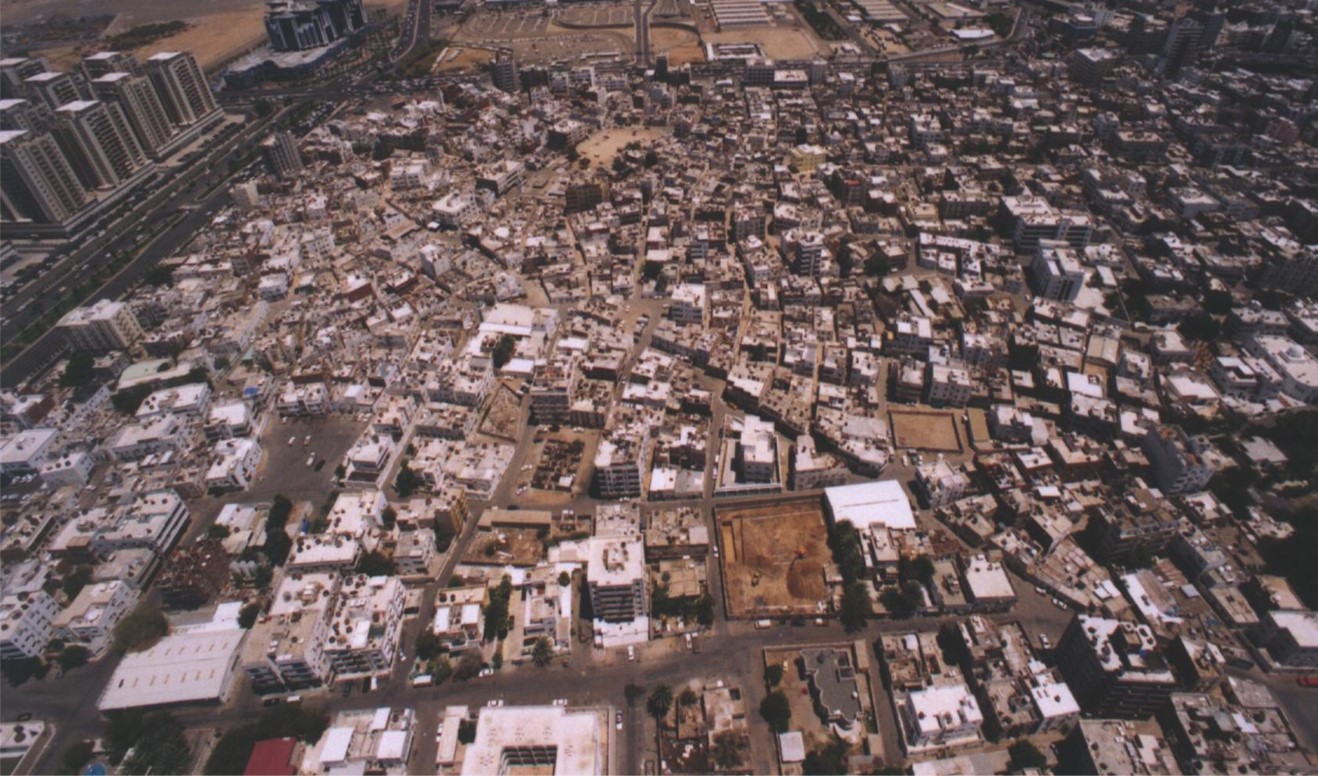
sherafiyah

These are some developing thoughts about how to plan and grow cities.

Growing, as opposed to planning or building, is important as the cities we think of as successful today weren’t designed in one attempt, or built in a few phases, but grew over many years.

There’s a lot of criticism of the way cities currently respond in a physical way to their wider economic and social context. It is arguable that planning in its current form has not and does not achieve the objectives it sets out to. Many cities are fragmented by infrastructure, set out in low density single use zones, suffer poor health, are difficult to grow, irresponsive to market conditions, irresponsive to their residents, or uncoordinated in outcome.

Read More

title

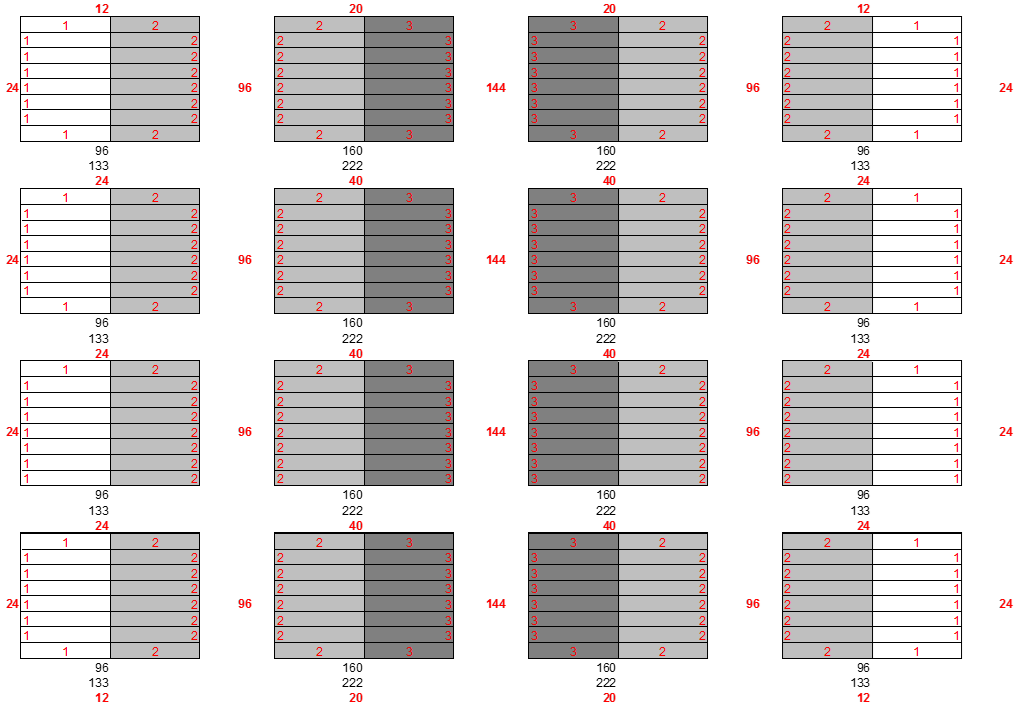
This post works through two examples to make a case for measuring density in terms of population per length of street rather than population per unit area.

It uses two different building typologies to distribute people. While these are typologies rather than measures of density, they are important because they are often how higher level, block-based densities get interpreted and applied at the scale of the urban block.

In both cases a consistent block size and population have been used. The variation comes from the way this population is distributed at the block level (through individual buildings on individual plots, or through a single building on a single plot.

These two approaches have then been distributed across a grid of streets, and compared in terms of the number of people who live on each street. While this is a very simple measure – it does not consider the people who may be passing through the street as part of a larger scale journey – it does give an impression of the latent activity that could occur.

Read More